Spring can be hard on your garage doors in ways that many homeowners don’t expect. In colder climates, the spring thaw results in substantial moisture that can undermine garage door components. Soon after, the heavy rains of spring arrive. Torrential rain, high winds, and even hail can pound your garage doors. Your garage doors are also subject to increased UV exposure and thermal expansion and contraction from sharp, sudden temperature changes.
These influences can damage weatherproofing, insulation, tracks, cables, springs, automatic openers, and the doors themselves. Let’s explore how you can prevent this deterioration and the warning signs that your doors need professional attention.
Schedule a Spring Garage Door Inspection and Maintenance Session
Avoid the mistake of never scheduling garage door service until you experience a problem you can’t ignore. Homeowners should perform cursory examinations at least once a month, looking for potential problems. If you notice any, you can schedule professional service then. Even if you don’t notice issues, schedule an inspection at least once a year. Early in the spring, after the first thaw, is an excellent time to book that appointment. A technician can identify any damage that occurred during the winter. They can also recommend any maintenance you need to withstand the elements in the spring and summer ahead.
Enhance Your Garage Door Weather Seals
Weather stripping is very important for your garage doors, as it creates a watertight seal between the outside and the garage. Moisture and high humidity within your garage can rust metal components and increase component wear and tear in other ways. Optimally, your garage doors should have seals along the bottom, top, and sides. Modern doors typically have vinyl molding along the top and sides. Those strips are durable and don’t experience much wear and tear, but they’ll still eventually deteriorate over time. The rubber or vinyl strip along the bottom of the door experiences much more wear. You may have to replace it and, if applicable, any floor-mounted threshold seals every spring. Replace your weather seals as soon as you notice any deterioration, including:
- Gaps
- Tears
- Cracks
- Brittleness
- Discoloration
Add and Replace Insulation to Improve the R-Value
Garage door insulation helps to prevent heat energy exchange. The temperature of an unfinished garage should mirror the ambient temperature. If there’s insufficient insulation, the garage will be colder and drier during cool periods and hotter and more humid during warm periods. The higher temperature and humidity, in particular, can impact your garage door components as well as your vehicles and any stored possessions.
If you use the garage door for vehicle and other storage, the R-value should be between R-6 and R-8. If you have a finished garage, it should be R-10 or higher. A garage door professional can upgrade the insulation to achieve these values. Insulation will deteriorate with time, and you should replace it as soon as you begin to notice signs of deterioration.
Review the Condition of the Springs
Springs are critical to the performance, safety, and maintenance of your garage doors. The springs bear the majority of the weight when the doors open and close. They also provide the necessary tension when the doors are open and the track system is supporting them. Residential garage doors have two main spring types: torsion and extension. The torsion spring is a heavy-duty part that runs along the top of the door. Problems with it will often manifest as loud, unusual noises and uneven opening/closing. Extension springs are vertical springs that run along the sides to provide additional support. These should be tightly coiled and free of corrosion. Call a professional as soon as you notice rust or a spring stretching out.
Review the Cable’s Health
The garage door cables are integral as well, as they help the springs lift, lower, and balance the doors. Replace cables as soon as you notice fraying, corrosion, or other issues. A snapped cable can cause serious injuries. Worn cables can also cause significant damage to your garage door system.
Check Your Garage Door Tracks
Look along the entire run of your tracks to ensure there aren’t any loose fasteners. Even one loose screw can cause vibrations that result in more serious wear over time. Look at the door, and ensure that it sits evenly and flush when closed. If anything looks off, use a level to confirm problems. A difference of 1/4 inch or more requires immediate professional attention.
Test for Manual Opening and Closing
If your garage doors sit for long periods, it’s important to regularly test manual opening and closing. Doors should open and close smoothly without you having to use a great deal of force. If you have an automatic opener, you may need to pull the red release cord first.
Test the Automatic Garage Door Opener
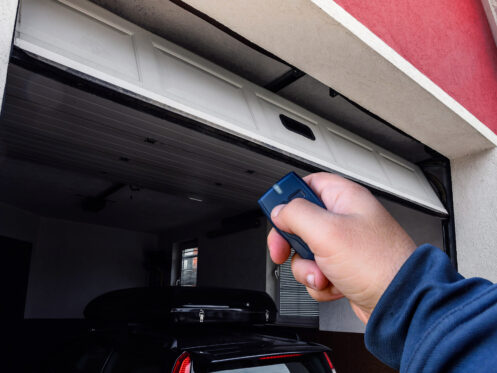
Reengage the opener, and use it to open and close the garage door. Test both the switch in the garage and all your remotes. Check the garage door sensors as well. Ensure that the lenses are clean, and the LED lights are solid and not blinking. Look for moisture within the enclosure. It’s a common problem in spring, and if present, you need your sensors cleaned, calibrated, and resealed.
Manage Excess Moisture
Proper weather stripping and insulation should prevent excess moisture in your garage. Improving circulation by running a fan can help. You can also use desiccants, upgrade the garage ventilation, or use a portable dehumidifier.
Deal With Excessive Mud
Mud is difficult to remove and can decrease the performance of your tracks, springs, and other components. Professional spring cleaning and maintenance will remove this buildup. When you see it accumulate, use a plastic scraper and a mild degreaser to remove it. Don’t make the mistake of lubricating the tracks. You can lubricate hinges, springs, rollers, and locking mechanisms. Tracks need clean metal, and using lubricant will contribute to your mud problems.
When to Schedule Repairs
Be proactive when it comes to scheduling garage door repairs. It’s better to err on the side of caution. Minor issues usually won’t go away on their own. With time, they can prevent safety risks, especially for children and pets, and deteriorate into much more expensive repairs. When you notice light maintenance issues, schedule an appointment as soon as it’s practical. If you notice more serious issues, call your local garage door company for an emergency repair. These qualify as emergencies:
- Door misalignment
- Door slamming shut
- Door won’t remain flush
- Frayed or snapped cables
- Broken or stretched springs
- Recurring tripped circuit breakers
- Opener strains, runs hot, or hums loudly
Garage Door Services Throughout Montgomery County and Beyond
Halls Garage Doors is a residential and commercial garage door company based in Christiansburg, VA. We have over four decades of experience meeting the needs of Montgomery County homeowners and businesses. Our company offers a full range of residential garage door services. Our team provides garage door inspection, maintenance, and repair services for all brands and models. We can also upgrade your older doors with beautiful, modern solutions.
To schedule a service appointment or on-site consultation, contact our team at Halls Garage Doors.