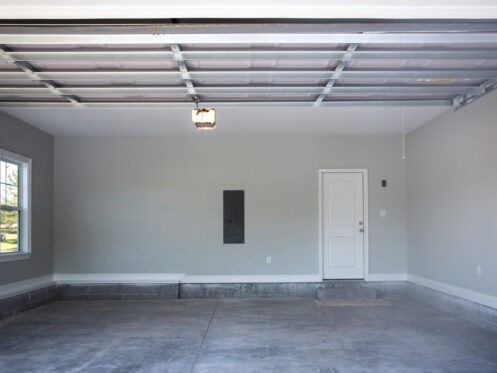
A garage door that reverses before closing is almost always responding to a safety or alignment issue. Your garage door opener is specifically designed to stop and reverse when it senses an obstruction in its path to prevent accidents and damage. From misaligned safety sensors to mechanical friction, several issues can trigger this behavior. Identifying the root cause is the first step toward getting your garage door back to operating smoothly and securely.
Why Garage Doors Reverse Before Closing
Modern garage door systems feature sophisticated safety mechanisms. The automatic reverse function is the most important one because it’s designed to protect people, pets, and property from being caught under a heavy closing door. When the system detects a problem, whether it’s a physical object or excess resistance during operation, it defaults to this safety mode and reverses direction.
The most common culprits behind unnecessary reversals are the photoelectric safety sensors located near the bottom of the garage door tracks. Mechanical issues, such as problems with the tracks, rollers, or the door’s balance, can also create enough resistance to trigger the opener’s safety logic. Even the opener motor unit’s settings can be a factor.
Safety Sensors Are the First Thing to Check
Most of the time, a residential garage door that reverses unexpectedly is due to an issue with the safety sensors. These two small “eyes” are mounted on each side of the door opening, about 6 inches off the floor. One sensor sends a narrow beam of infrared light to the other. If anything interrupts this beam while the door is closing, the opener immediately reverses the door.
Checking the status lights on the sensors themselves can often give you a clue. A steady light usually means they are aligned, while a blinking or off light indicates a problem.
- Dirty sensor lenses with dust or debris
- Sensors knocked out of alignment
- Objects blocking the sensor path
- Loose, frayed, or damaged sensor wiring
- Blinking lights indicating an error
Track, Roller, or Door Balance Problems
Your garage door is a heavy piece of equipment that relies on a series of mechanical parts working in harmony. When one of these parts fails or wears out, it can create friction and resistance that the opener interprets as an obstruction.
Bent or damaged tracks are a common source of trouble. Even a small dent can catch a roller and stop the door’s momentum, triggering the reverse mechanism. Similarly, worn or broken rollers won’t move smoothly within the tracks, causing the door to bind and jerk as it closes. This added strain is often enough to make the opener think it has hit something.
An improperly balanced door is another significant and more serious issue. High-tension springs carry most of the door’s weight. If the springs are worn out or broken, the door becomes incredibly heavy. Never attempt to adjust or replace garage door springs yourself, as they are under extreme tension and can cause severe injury.
Opener Settings and Force Limits
Your garage door opener has internal settings that dictate how it operates. These settings, known as the travel and force limits, tell the opener how far the door should move and how much pressure it should apply before stopping. If these settings are incorrect, they can cause the reversing issue.
The travel limit determines the fully open and fully closed positions of the door. If the “down” travel limit is set too low, the door will hit the floor before the opener thinks it should, causing it to interpret the floor as an obstacle and reverse. The force limit controls how much power the motor will use to open and close the door. If the force is set too low, even minor resistance from dirty tracks or cold weather can trigger the reversal.
When the Problem Points to a Repair Need
After checking for obvious obstructions and cleaning the safety sensors, you may reach a point where the problem requires professional expertise. Garage door systems are complex and can be dangerous to work on without the right tools and training. If your door keeps reversing, it’s time to call for professional garage door repairs.
Signs that you need an expert include visibly bent tracks, frayed cables, or a door that feels excessively heavy when you try to lift it manually with the opener disconnected. Unusual noises like grinding, popping, or scraping also clearly indicate a mechanical issue that needs attention. A trained technician can accurately diagnose the problem, whether it’s a spring issue, a damaged roller, or an internal opener motor problem.
Why You Shouldn’t Ignore a Door That Reverses
A garage door that won’t close properly can put you and your home at risk. Ignoring the problem can lead to more serious consequences. If the reversing mechanism malfunctions, it may fail to activate when there is a real obstruction, creating a serious safety hazard.
Furthermore, a garage door that won’t stay closed leaves your home vulnerable. An open garage invites pests and intruders, compromising your property and family’s security.
For Garage Door Repair, Call Halls Garage Doors
A garage door that reverses before closing is a clear signal that something in the system needs attention. While the cause is often a simple fix related to the safety sensors, it can also indicate more complex mechanical or opener issues. Addressing the problem promptly ensures your door operates safely, reliably, and securely.
Contact Halls Garage Doors in Christiansburg, VA, to get your door working perfectly again.
FAQs
Have more questions about your garage door’s behavior? You can find answers to more frequently asked questions on our website or read on for a few common queries.
Intermittent reversing can be caused by several factors. Loose wiring on a safety sensor might drop the connection only when the door vibrates. Sunlight hitting a sensor at a specific time of day can also cause a temporary issue. It could also be a mechanical problem, like a worn roller that only binds at a certain spot in the track.
Yes, direct, bright sunlight can interfere with garage door safety sensors. If the sun shines directly into the receiving sensor’s lens, it can “blind” it and prevent it from detecting the infrared beam from the sending sensor. This effectively tricks the system into thinking an object is blocking the path, causing the door to reverse.
No, it’s not safe to continue using a garage door that reverses without a clear cause. This behavior indicates a safety system fault or a mechanical issue. Using the door in this condition compromises its primary safety features and leaves your home unsecured. If possible, keep the door closed manually and schedule a professional inspection as soon as you can.